1、 Poynder, John. Literary extracts from English and other works; collected during half a century. London: John Hatchard & Son. 1844. https://iterative.tools/2QV38gn.
2、 Reddit.com. https://iterative.tools/2QVu7aI.
3、 “Tech Won't Build It: The New Tech Resistance,” MIT Panel Discussion, July 2018, https://iterative.tools/2zsbbL1.
4、 Hsu, Jeremy. “Engineers Say ‘No Thanks’ to Silicon Valley Recruiters, Citing Ethical Concerns.” IEEE Spectrum: Technology, Engineering, and Science News, IEEE Spectrum, 9 Aug. 2018, https://iterative.tools/2xzPDus.
5、 “Is This the Beginning of a Tech Worker Revolution?” KQED, August 27, 2018, https://iterative.tools/2QWjTI2.
6、 Bergen, Mark. “Google Renounces AI Weapons; Will Still Work With Military,” June 7, 2018. https://iterative.tools/2QFXAW9.
7、 Conger, Kate, and Daisuke Wakabayashi. “Google Employees Protest Secret Work on Censored Search Engine for China.” The New York Times, August 16, 2018, https://iterative.tools/2LT6Tz2.
8、 Matsakis, Louise. “Ex-Microsoft employees sue over PTSD from reviewing disturbing content,” Mashable, January 14, 2017, https://iterative.tools/2IdMd4A.
9、 Swisher, Kara. “The Expensive Education of Mark Zuckerberg and Silicon Valley.” The New York Times, The New York Times, August 2, 2018, https://iterative.tools/2MZReyv.
10、 Wong, Queenie. “Menlo Park, East Palo Alto Residents Rally against Facebook, Amazon amid Gentrification Concerns.” The Mercury News, April 6, 2017, https://iterative.tools/2OPyy6m.
11、 Conger, Kate, and Sheera Frenkel. “Dozens at Facebook Unite to Challenge Its 'Intolerant' Liberal Culture.” The New York Times, August 28, 2018, https://iterative.tools/2NDwfGX.
12、 Tayan, Brian, and Stanford Graduate School of Business. “The Wells Fargo Cross-Selling Scandal.” The Harvard Law School Forum on Corporate Governance and Financial Regulation, https://iterative.tools/2OeVmQ4.
13、 Miller, Ron. “Equifax Data Leak Could Involve 143 Million Consumers.” TechCrunch, September 7, 2017, https://iterative.tools/2QVRrG8.
14、 Israni, Ellora Thadaney. “When an Algorithm Helps Send You to Prison.” The New York Times, October 26, 2017, https://iterative.tools/2NHgcrS.
15、 Bilton, Nick. “‘We're F--Ked’: There Is Only One Antidote to Silicon Valley's Ills... Their Engineers.” The Hive, Vanity Fair, August 31, 2018, https://iterative.tools/2OMit1f.
16、 Mitcham, Carl. Encyclopedia of Science, Technology, and Ethics. Macmillan Reference USA, 2005. Pages 1152-1153. https://iterative.tools/2xO8QIh.
17、 Bemis, Edward W. “The Homestead Strike.” Journal of Political Economy, v.2 no.3, 1894, pp. 369–396. https://iterative.tools/2QRf8iO.
18、 Waller, William T. “The Evolution of the Veblenian Dichotomy: Veblen, Hamilton, Ayres, and Foster.” Journal of Economic Issues, vol. 16, no. 3, 1982, pp. 757–771. https://iterative.tools/2NGiuHF.
19、 Ibid.
20、 Mumford, Lewis. Technics and Civilization. Harcourt Brace and Co., 1934. https://iterative.tools/2Q4wXK9.
21、 “Fordism & Postfordism,” Willamette University, https://iterative.tools/2MWSwuc.
22、 “PBS Presentation: The Great Depression,” April 2013, https://iterative.tools/2DqJJRS.
23、 Galbraith, John Kenneth, “The Mayfair Set: Destroy the Technostructure,” BBC, 1999. https://iterative.tools/2NDEwLa.
24、 Ibid.
25、 Galbraith, John Kenneth, The New Industrial State. Mifflin, 1971. https://iterative.tools/2Q4UxWX.
26、 Coase, and R. H. “Industrial Organization: A Proposal for Research.” NBER, University of Chicago Press, https://iterative.tools/2NExMMM.
27、 Coase, R. H. “The Firm, the Market, and the Law,” National Bureau of Economics, 1987, Page 7. https://iterative.tools/2zrqIdJ.
28、 Rifkin, Jeremy. The Zero Marginal Cost Society. Palgrave Macmillan, 2014. Page 82. https://iterative.tools/2QTQIoR.
29、 Berle, Adolph. The Modern Corporation and Private Property. Routledge, 1991. https://iterative.tools/2NGle7V.
30、 Ibid.
31、 Burnham, James. The Managerial Revolution. Penguin Books, 1945. Page 118. https://iterative.tools/2zrrpnl.
32、 Mintzberg, Henry. Power in and around Organizations. Prentice-Hall, 1983. Page 136. https://iterative.tools/2xQIYv6.
33、 Pettigrew, Andrew M. The Politics of Organizational Decision Making. Routledge, 2009. Page 77. https://iterative.tools/2xQIYv6
34、 Ibid, page 129.
35、 Ibid, page 133.
36、 Ibid.
37、 Argyris, Chris. Overcoming Organizational Defenses: Facilitating Organizational Learning. Prentice-Hall, 1990. Page 7. https://iterative.tools/2IdG6xj.
38、 “Scott Adams,” Wikipedia, https://en.wikipedia.org/wiki/Scott_Adams.
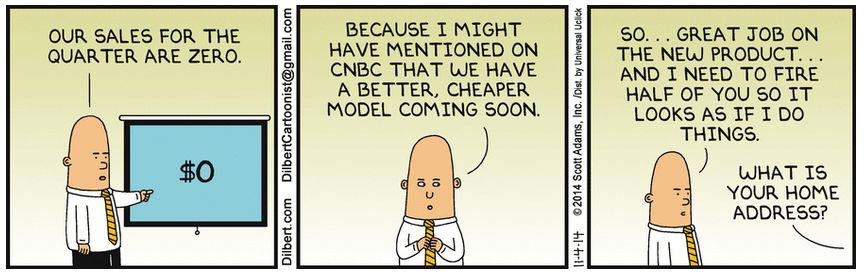
39、 Dilbert by Scott Adams, Nov. 14, 2014. https://iterative.tools/2QWDE28.
40、 Mintzberg, page 130.
41、 Ibid.
42、 Ibid, page 132.
43、 Ibid.
44、 Castro, Jose Dieguez. Introducing Linux Distros. Apress, 2016. Page 10. https://iterative.tools/2NDOQTo.
45、 Gehring, Verena V. The Internet in Public Life. Rowman & Littlefield, 2004. https://iterative.tools/2pA6Fo0.
46、 Richard Stallman, “Hackers: Wizards of the Electronic Age.” YouTube, 1986, https://iterative.tools/2xAzdlI.
47、 “The Hacker Community and Ethics: An Interview with Richard M. Stallman” Gnu.org, 2002, https://iterative.tools/2Q4LTId.
48、 “The Hacker Ethic,” New York Times, 2001, https://iterative.tools/2pxa7j2.
49、 “Luddite,” Wikipedia, https://en.wikipedia.org/wiki/Luddite.
50、 Soderberg, Johan. Hacking Capitalism: the free and open source software movement. Routledge, 2008. Page 2. https://iterative.tools/2O8Avhe.
51、 Himanen, Pekka. The Hacker Ethic: a Radical Approach to the Philosophy of Business. Random House, 2002. https://iterative.tools/2MWXvLq.
52、 Himanen, Pekka. “The Hacker Ethic,” New York Times, 2001, https://iterative.tools/2pxa7j2.
53、 Spence, A. Michael, RAND Corp., "The learning curve and competition". Bell Journal of Economics, Spring 1981, 12 (1): pages 49–70. https://iterative.tools/2xP5EvX.
54、 Gilbert, R.J., and Newbery, David, "Preemptive patenting and the persistence of monopoly.” The American Economic Review. June 1982, 72 (3): pages 514–526. https://iterative.tools/2Ob9lpV.
55、 Gabriel, Richard. “The Rise of “Worse Is Better,” 1991, https://iterative.tools/2ONxFuV.
56、 Ante, Spencer. Creative Capital: Georges Doriot and the Birth of Venture Capital. Harvard Business Review Press, 2008. https://iterative.tools/2Rtk1z8.
57、 Fogel, Karl. Producing Open Source Software. O’Reilly Media, 2006. Page 7. https://iterative.tools/2zshkXn.
58、 Cowe, Roger. “Jim Slater Obituary.” The Guardian, Guardian News and Media, 22 Nov. 2015, https://iterative.tools/2xBUkUy.
59、 Staff, Investopedia. “Michael Milken.” Investopedia, 15 May 2018, https://iterative.tools/2IcxjLU.
60、 “The Mayfair Set: Episode 3, Destroy the Technostructure,” BBC, 1999. https://iterative.tools/2NDEwLa.
61、 Warren, Tom, “Microsoft Axes its Controversial Stack Ranking System,” Verge.com, Nov 12, 2013, https://iterative.tools/2wDAtTN
62、 “Why Does Google Stack Rank Its Employees despite the High Rate of Disapproval and Controversy within the Company?” Quora, https://iterative.tools/2DqMHpa.
63、 Nisen, Max. “A Lawsuit Claims Microsoft's Infamous Stack Rankings Made Things Worse for Women.” Quartz, 17 Sept. 2015, https://iterative.tools/2OMnkzC.
64、 Korytko, Andrew. “Do We Need Scheduled Stack-Ranking Anymore?” Forbes Magazine, 12 Dec. 2017, https://iterative.tools/2DspRNX.
65、 “Taking Tesla Private.” Tesla, Inc, 8 Aug. 2018, https://iterative.tools/2Q77XlB.
66、 “Business Roundtable Supports Move Away from Short-Term Guidance,” Business Roundtable, https://iterative.tools/2Oflg6g.
67、 “What Is Free Software and Why Is It so Important for Society?” Free Software Foundation, https://iterative.tools/2pAnnUf.
68、 Ibid.
69、 “The kernel is a computer program that is the core of a computer's operating system, with complete control over everything in the system. On most systems, it is one of the first programs loaded on start-up (after the bootloader). It handles the rest of start-up as well as input/output requests from software, translating them into data-processing instructions for the central processing unit. It handles memory and peripherals like keyboards, monitors, printers, and speakers.” “Kernel,” Wikipedia. https://iterative.tools/2A0yQlQ.
70、 "Facebook–Cambridge Analytica Data Scandal." Wikipedia. August 28, 2018. https://en.wikipedia.org/wiki/Facebook–Cambridge_Analytica_data_scandal.
71、 “Facebook says 50 million accounts were breached,” USA Today, September 28, 2018. https://iterative.tools/2NvhxNb.
72、 “GNU Manifesto,” GNU.org, https://iterative.tools/2DtyMyU.
73、 Ibid.
74、 Waller, William Jr., “The Evolution of the Veblenian Dichotomy: Veblen, Hamilton, Ayres, and Foster,” Journal of Economic Issues, Vol. XVI, No. 3, Sept. 1982. https://iterative.tools/2LPDjdL.
75、 Raymond, Eric, “The Cathedral & the Bazaar,” Snowball Publishing, 1997. https://iterative.tools/2QTJIbE.
76、 Hill, Benjamin. “To Fork or Not to Fork,” https://iterative.tools/2wAHsMY, 2005.
77、 “All Watched Over by Machines of Loving Grace.” Wikimedia Foundation, 2018, https://iterative.tools/2CxCXs6.
78、 Madrigal, Alexis C. “Weekend Poem: All Watched Over by Machines of Loving Grace.” The Atlantic, Atlantic Media Company, 19 Sept. 2011, https://iterative.tools/2CgGY4W.
79、 “All Watched Over by Machines of Loving Grace, Episode 1: Love and Power.” Vimeo, 29 July 2018, https://iterative.tools/2NBUAgu.
80、 “Cyberspace and Power,” BBC, produced by Adam Curtis, 2017. https://iterative.tools/2xD4J2q.
81、 “Hypernormalisation,” BBC, produced by Adam Curtis, 2016. https://iterative.tools/2zsX6gb.
82、 Barbrook, Richard, “The Californian Ideology,” 1995, https://iterative.tools/2N8BzBh.
83、 Barlow, John Perry, https://en.wikipedia.org/wiki/John_Perry_Barlow, Wikipedia.
84、 “Hypernormalisation,” BBC, produced by Adam Curtis, 2016. https://iterative.tools/2zsX6gb.
85、 May, Timothy. “The Crypto Anarchist Manifesto,” Satoshi Nakamoto Institute, 1992, https://iterative.tools/2OWlR9G.
86、 Bernstein vs United States, Wikipedia, https://iterative.tools/2Ihlapg.
87、 Narayanan, Arvind. “What Happened to the Crypto Dream?” IEEE Security & Privacy, vol. 11, no. 3, 2013, pp. 68–71. https://iterative.tools/2QUmRNb.
88、 Ibid.
89、 Cypherpunk, Wikimedia, https://iterative.tools/2wGBABZ.
90、 Manne, Robert. "The Cypherpunk Revolutionary." The Monthly. December 09, 2015. https://iterative.tools/2O9XJDs.
91、 Ibid.
92、 Manne, Robert. "The Cypherpunk Revolutionary." The Monthly. December 09, 2015. https://iterative.tools/2O9XJDs.
93、 Rogway, Philip, “The Moral Quality of Cryptographic Work,” 2015, https://iterative.tools/2QTdflX.
94、 Dannen, Chris, “Inside Github’s Super-Lean Management Strategy and How It Drives Innovation,” Fast Company, https://iterative.tools/2NcHGo8, 2013.
95、 “Scope creep,” Wikipedia, https://en.wikipedia.org/wiki/Scope_creep.
96、 Soderberg, page 2.
97、 “The Human Cost of Tech Debt,” DaedTech, https://iterative.tools/2IdylHI.
98、 “Anti-Pattern,” Wikipedia. Wikimedia Foundation, August 29, 2018. https://en.wikipedia.org/wiki/Anti-pattern.
99、 Church, Michael, “What Is Open Allocation?”, https://iterative.tools/2xBeVIq.
100、 Karim R. Lakhani and Robert G Wolf, MIT Sloan School of Management and The Boston Consulting Group, “Why Hackers Do What They Do: Understanding Motivation and Effort in Free/Open Source Software Projects,” edited by J. Feller, B. Fitzgerald, S. Hissam, and K. R. Lakhani, MIT Press, 2005. https://iterative.tools/2NKeOQT.
101、 “Should We Celebrate the Anniversary of Open Source?” Open Source Initiative, https://iterative.tools/2xM1HIr.
102、 “Open Source Misses the Point,” GNU.org, https://iterative.tools/2zs6MaN
103、 Candeub, Adam. “Will Microsoft's Embrace Smother GitHub?” The Wall Street Journal, Dow Jones & Company, June 24, 2018. https://iterative.tools/2Q1Omnq.
104、 “Ballmer: Linux is a cancer,” The Register, June 2, 2001, https://iterative.tools/2IfzzSy.
105、 “History: The Agile Manifesto.” Agilemanifesto.org, https://iterative.tools/2Q4Y9sd.
106、 Finley, Klint. “Linux Took Over the Web. Now, It's Taking Over the World.” Wired, June 3, 2017. https://iterative.tools/2xALuGM.
107、 “How Bloomberg Integrated Learning-to-Rank into Apache Solr.” Tech At Bloomberg, January 23, 2017. https://iterative.tools/2MOeQuY.
108、 “What Are the Differences between Mac OS and Linux?” Ask Ubuntu, https://iterative.tools/2NGclqB.
109、 Hayden James. "81% of All Smartphones Are Powered by Linux," HaydenJames.com, July 19, 2018. https://iterative.tools/2O9kHuB.
110、 Vaughan-Nichols, Steven J. “Linux Is under Your Hood.” ZDNet, April 11, 2018. https://iterative.tools/2ztfndl.
111、 “Android Auto Coming to Audi Dashboards, No Phone Required.” Android Authority. Android Authority, May 25, 2017. https://iterative.tools/2N9TIi0.
112、 Vaughan-Nichols, Steven J. “Tesla Starts to Release Its Cars' Open-Source Linux Software Code.” ZDNet. ZDNet, May 30, 2018. https://iterative.tools/2wMZkVl.
113、 Soderberg, page 15.
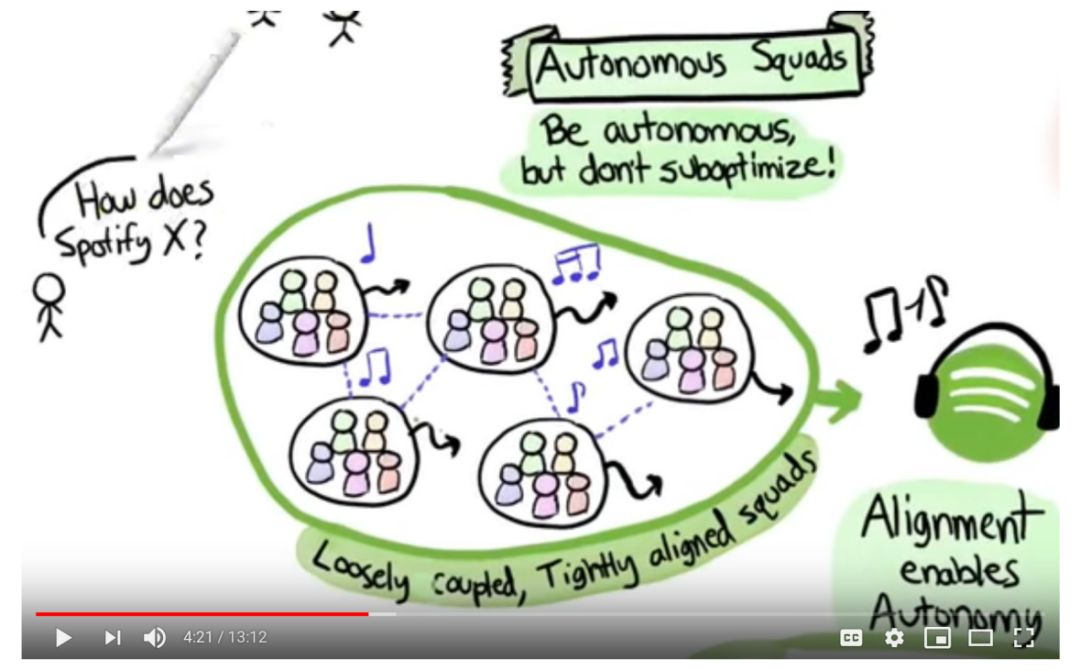
114、 How Spotify Works, Part 1: https://iterative.tools/spotify1.
115、 How Spotify Works, Part 2: https://iterative.tools/spotify2.
116、 “Six FAQs about developing a responsive organization,” Microsoft.com, https://iterative.tools/2wFtgCE
117、 Mims, Christopher. “Google Engineers Insist 20% Time Is Not Dead-It's Just Turned into 120% Time,” Quartz, August 20, 2013. https://iterative.tools/2Q4YNWF.
118、 Low, Jonathan. “How Digital Maturation Is Transforming Organizational Leadership.” The Low-Down, https://iterative.tools/2Dusb7f.
119、 Lakhani and Wolf, “Why Hackers Do What They Do: Understanding Motivation and Effort in Free/Open Source Software Projects.” https://iterative.tools/2NKeOQT.
120、 Soderberg, page 4.